About

An independent institute where evidence meets decision-making.

Why AHeD exists

Africa continues to face major public health challenges, including a continued burden of communicable diseases, a rising burden of noncommunicable diseases, and significant gaps in access to quality care. These pressures are compounded by persistent health system weaknesses across many countries.

Yet the challenge is not only disease burden. Across many settings, research uptake for health policymaking remains limited. Common barriers include weak stakeholder engagement, inadequate dissemination platforms, and poor contextualisation of evidence. The institutional picture has gone backwards, not forwards: the share of countries in the WHO African Region with an active knowledge translation platform, a structured mechanism for moving evidence into policy, rose to 59% in 2018, then fell to 41% by 2022.

Implementation challenges deepen the problem. In many settings, weak sustainability planning, limited system support and inadequate feedback mechanisms undermine the continuity, scale-up and long-term impact of health interventions.

Together, these challenges highlight an important institutional gap: the limited availability of independent platforms within the health sector that can translate public health evidence into policy-relevant insight, support implementation learning, and foster informed dialogue across policymakers, researchers, practitioners, civil society and communities.

That is the gap AHeD fills.

41%

of countries in the WHO African Region had an active knowledge translation platform in 2022, down from 59% in 2018.

Source

WHO Regional Committee for Africa

Progress report on research for health: a strategy for the African Region, 2016–2025

AFR/RC73/INF.DOC/1 · 2023 · Read the report

Vision

An Africa where health systems are responsive, equitable, and shaped by credible evidence and meaningful dialogue.

Mission

To strengthen health systems in Ghana and across Africa by translating public health evidence into policy insight, through meaningful dialogue and implementation learning.

Our values

  • Evidence
  • Dialogue
  • Integrity
  • Collaboration
  • Impact

We take integrity to mean independence in practice rather than in name, which is why we publish who funds us.

What we do

Four objectives.

Promote evidence-informed policy and practice

We generate, synthesise and translate public health evidence to support stronger policymaking, more effective implementation, and better health system performance.

Convene meaningful policy dialogue

We create inclusive spaces where policymakers, researchers, practitioners and communities shape decisions that are informed, practical, and grounded in lived realities.

Close the gap between policy and implementation

We work on the alignment between how policy is designed and how it is delivered, using approaches built for specific contexts rather than imported wholesale.

Build capacity to improve health systems

We equip stakeholders with the knowledge, tools and skills to engage effectively in health policy processes.

How we work

One continuous cycle, not three separate services.

AHeD works through three units: Research and Evidence, Policy and Knowledge Translation, and Public Engagement and Dialogue. They operate as one continuous cycle.

We choose topics where decisions are actually being made, guided by stakeholder demand and by national and regional priorities. We synthesise the evidence and translate it into something a policymaker can act on. We convene the people who need to be in the room, combining technical evidence with direct experience of delivery. And we align that dialogue with real decision points such as policy reviews, planning cycles and programme redesigns, so that it arrives while it can still change something.

Every engagement produces outputs: a policy brief, implementation guidance, and an agreed set of follow-up actions. We publish those actions. What we learn from them goes back into the next cycle.

See our three themes

The AHeD cycle A continuous four-stage loop. Evidence is synthesised and contextualised. Policy insight is produced from it. Dialogue tests that insight against implementation realities. Lessons are captured as impact, and feed back into evidence. AHeD 1 Evidence 2 Policy 3 Dialogue 4 Impact

Stage 1 of 4

Evidence

We curate and synthesise evidence on priority health issues, chosen from stakeholder demand and from where decisions are actually approaching. Complex research and technical information become insight a policymaker can use.

See our publications

Select a stage on the diagram

Independence and funding

Independence in practice.

AHeD is an independent institute. Our analysis and conclusions are our own, and no funder has editorial control over our publications or our convenings.

Our board provides governance oversight and does not direct research findings. Board members' other institutional affiliations are listed on their profiles.

We publish our methods alongside our conclusions so that anyone can judge the work on its merits.

The people

Independent analysis rests on the people who do it.

Board of Directors

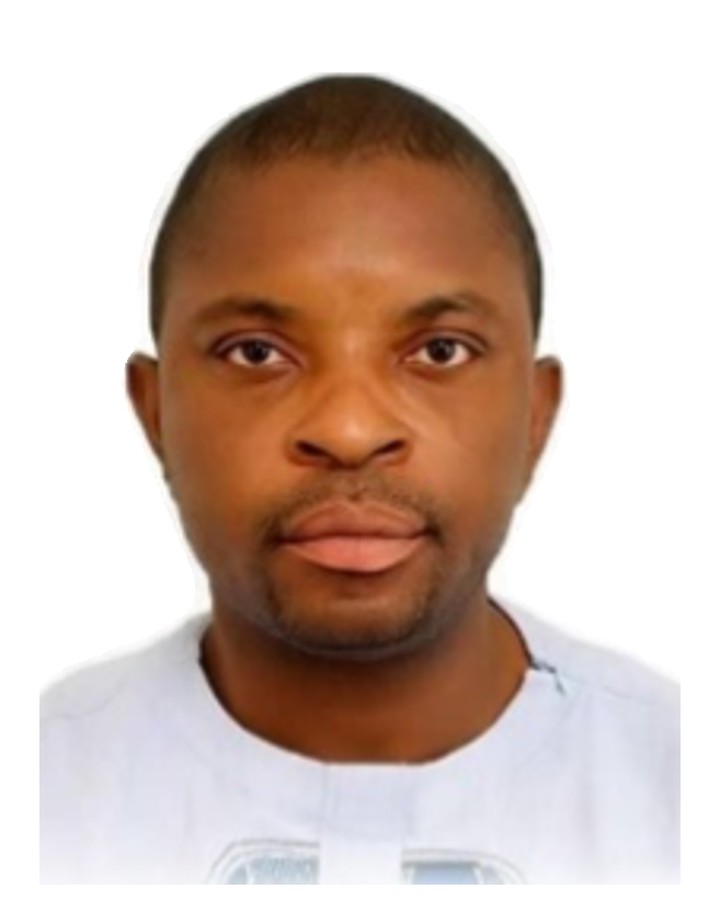
Dr Emmanuel Ankrah Odame, Board Chair of Africa Health Discourse

Dr Emmanuel Ankrah Odame

Board Chair

Korle-Bu Teaching Hospital; lecturer at the University of Ghana Medical School, School of Public Health and Ghana School of Law

Former Director, Policy, Planning, Monitoring and Evaluation, Ministry of Health, Ghana

Dr. Emmanuel Ankrah Odame has worked across government, academia and the private sector, and brings more than two decades of public sector experience to AHeD. He has consulted for foreign medical businesses seeking to operate in Ghana, helping the Korean company KH Medical Africa Centre navigate the government regulatory system to establish itself, and now advises the same organisation. Working for the Korea International Cooperation Agency in partnership with UNICEF, he has assessed and selected health technology start-ups. He is among the stakeholders in the climate and health discussions with the Ministry of Environment, Science, Technology and Innovation and the Environmental Protection Agency, where the Carbon Credit Office sits.

He served as Director of Policy, Planning, Monitoring and Evaluation at Ghana’s Ministry of Health from 2016 to 2022, where he coordinated climate change action in the health sector. He was technical lead for the development of Ghana’s Universal Health Coverage Roadmap 2020–2030, and acted as focal point for Universal Health Coverage and the Sustainable Development Goals in the health sector, including the discussion of how the climate change agenda fits within UHC. He was the health sector’s focal point at the 2015 Sustainable Development Goals negotiations in New York, which grounds his understanding of the policy conversation on climate change. He established the Quality Management Unit at the Ministry of Health and was responsible for setting up the Institutional Public Health Unit at Ridge Hospital. He sat on the Steering Committee for Universal Health Coverage 2030, based in Geneva, until 2022.

He is currently with Korle-Bu Teaching Hospital and lectures in health policy, health systems and global health at the University of Ghana Medical School, the School of Public Health and the LLM programme of the Ghana School of Law. He has served as Co-Principal Investigator on an IDRC project worth approximately one million dollars, and on further projects funded by the US Centers for Disease Control and Prevention and IDRC. He is currently a partner on a European Union funded project in health economics and health policy with the Centre for Health Economics at the University of York, the University of Bergen, and West and East African regional health organisations. He has consulted for the Korea International Cooperation Agency, German Technical Cooperation and the West African Health Organisation, among others. He co-founded the Ghana chapter of the International Society for Pharmacoeconomics and Outcomes Research, and founded Honour Ghana, an NGO promoting a culture of honour among senior high school students. He has published widely in health policy and health economics, and serves on the boards of Phoenix Health Insurance, Assemblies of God Health Services and the Christian Health Association of Ghana.

Dr. Odame holds a degree in Medicine and an MPH, both from the University of Ghana. He also holds a specialist qualification in health policy from the Ghana College of Physicians and Surgeons, and is a Fellow of the West Africa College of Physicians. He has an additional qualification in negotiation and leadership from Harvard Law School.

Leadership and team

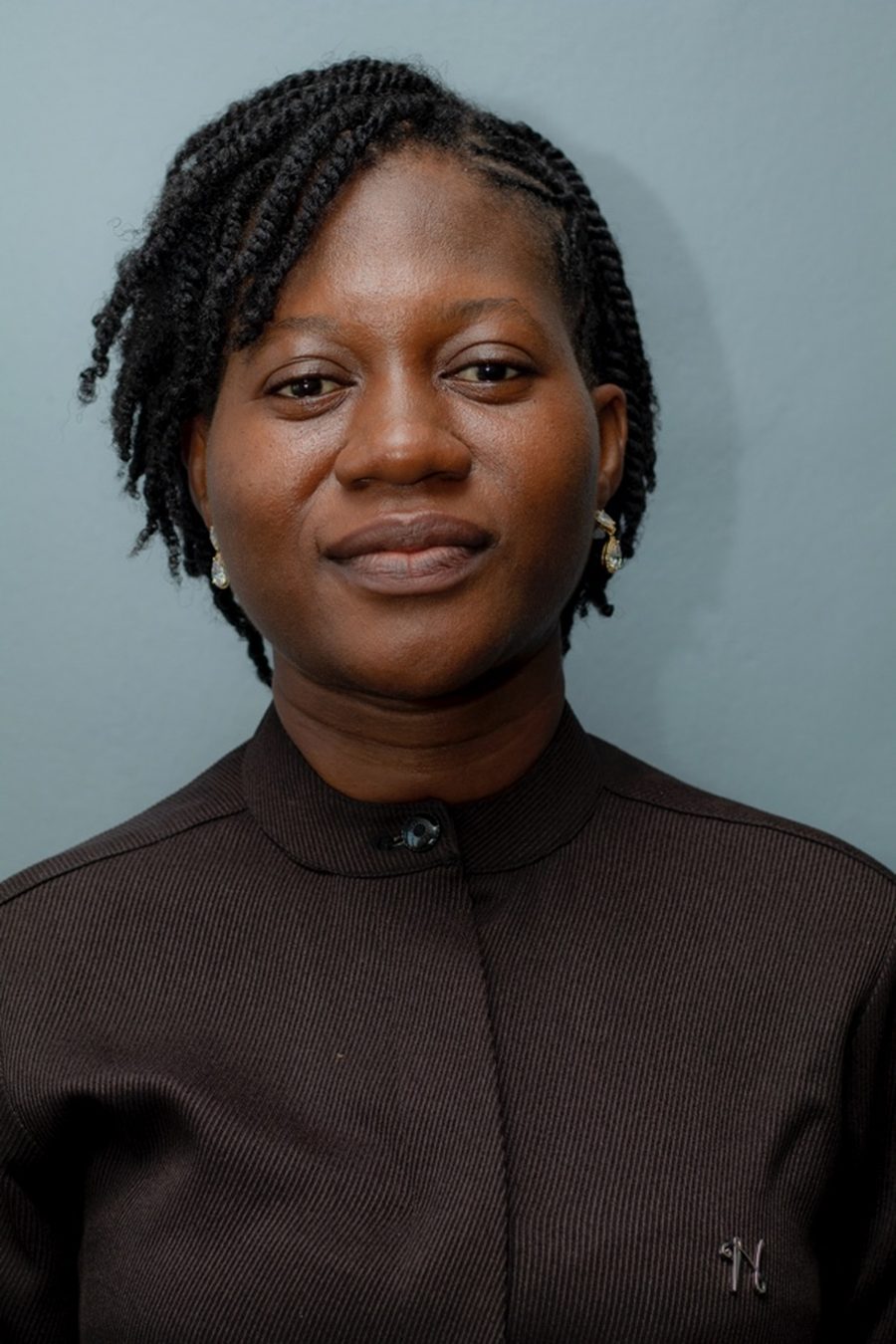
Dr Anna Yesunyonam Adjabeng, Executive Director of Africa Health Discourse

Dr Anna Yesunyonam Adjabeng

Executive Director

Dr. Anna Yesunyonam Adjabeng is a medical doctor and public health professional with interests in primary healthcare, global health research, and health policy. She holds a Master of Public Health from Imperial College London, where she studied as a Chevening Scholar, and a Bachelor of Medicine and Bachelor of Surgery from the University of Ghana Medical School. She also serves as Technical Advisor for Nutrition at School Farms, contributing her expertise to initiatives that promote nutrition and health among school communities.

At AHeD, she leads the team, providing strategic direction and shaping the organisation’s vision. She is committed to driving meaningful impact, translating evidence into practice, and contributing to stronger and more responsive health systems across Africa.

Dr Priscilla Akyaa Kyei-Baffour, Lead for Research, Policy and Programmes at Africa Health Discourse

Dr Priscilla Akyaa Kyei-Baffour

Lead, Research, Policy and Programmes

Dr. Priscilla Akyaa Kyei-Baffour is a medical doctor, Chevening Scholar, and health policy expert dedicated to advancing health system strengthening across Sub-Saharan Africa. She holds a Bachelor of Medicine and Bachelor of Surgery (MBChB) as well as a Master of Public Health (MPH) from the University of Ghana, alongside an MSc in Global Health Policy from The University of Edinburgh, combining frontline clinical insight with deep expertise in policy design and health systems research.

At Africa Health Discourse, she directs the organisation’s research agenda and strategic policy initiatives, driving evidence-informed solutions to the continent’s most pressing healthcare challenges. Driven by a vision of equitable and resilient health systems, she leads AHeD’s mission to bridge the gap between academic research and actionable public policy.

Dr Doreen Appiah-Num, Lead for Partnerships and Resource Mobilisation at Africa Health Discourse

Dr Doreen Appiah-Num

Lead, Partnerships and Resource Mobilisation

Dr. Doreen Appiah-Num is a medical doctor with a strong interest in youth development, public health, and community engagement. She holds a BSc in Biomedical Science from the University of Cape Coast and an MBChB from the University of Ghana. She is passionate about bridging the gap between health education and young people, empowering youth to make informed decisions about their wellbeing and future.

With a background in clinical medicine and active involvement in youth-centred conversations, Dr. Appiah-Num brings both professional insight and relatable lived experience to discussions that impact young people today. At AHeD, she leads efforts to build strategic partnerships and mobilise resources to help bridge the gap between policy and implementation.

Beatrice Owusu Agyemang, Lead for Communications and Engagement at Africa Health Discourse

Beatrice Owusu Agyemang

Lead, Communications and Engagement

Beatrice Owusu Agyemang is a communication and administrative professional, with a background in public relations and communications and a strong interest in public health and well-being. She is passionate about using her communication skills to educate, empower, and contribute to positive social impact in communities.

She currently works as an Assistant Administrator and Accountant and also has experience in the healthcare sector from her National Service at a hospital. At AHeD, she leads Communications and Engagement, where she brings her communication skills and interest in public health to support the organisation’s work. Beatrice is particularly passionate about creating positive social impact in ways that improve people’s health, well-being, and communities.

AHeD Newsletter

Notes on health policy in Ghana and across Africa.

Occasional. A few times a year, when we publish something or convene an event. No other mail.

Email us to subscribe